Introduction: Why Your Tactical Belt Is More Important Than You Think
Every tactical setup starts from the ground up, and at the center of that foundation is the perfect tactical belt. Whether you’re on active duty, at the shooting range, or just fine-tuning your everyday carry (EDC) setup, your belt determines how efficiently your gear performs.
A tactical belt isn’t just another clothing accessory — it’s a structural component designed to support equipment, maintain comfort, and withstand stress under demanding conditions. From law enforcement officers and security personnel to competitive shooters and outdoor enthusiasts, everyone in the tactical world depends on a belt that delivers strength, adaptability, and dependability.
This guide breaks down how to choose the right tactical belt — focusing on materials, design, features, and configurations — and introduces the LO-PRO 1.75″ Ratchet Belt, one of the most advanced belts designed for professionals.
The Purpose of a Tactical Belt
Tactical belts are built to do one thing: carry gear securely and comfortably. Unlike standard leather or fashion belts, they’re reinforced with heavy-duty materials like nylon webbing or polymer composites.
Their key advantages include:
- Load-bearing capacity: Designed to hold holsters, pouches, and tools without sagging.
- Rigidity: Prevents your belt from folding or twisting under weight.
- Quick-access utility: Keeps critical gear exactly where you need it, when you need it.
Tactical belts are used by:
- Law enforcement and first responders
- Military and security personnel
- Competitive shooters and firearms instructors
- Outdoor professionals, hikers, and contractors
Before investing in one, it’s worth knowing that tactical belts come in a few major types — each suited for different applications.
- Rigger Belts
Built for extreme durability, rigger belts are typically made with thick nylon webbing and a heavy-duty metal buckle. Originally designed for rappelling or rescue operations, they’re overbuilt — perfect for field missions or rugged outdoor use.
- MOLLE Belts
These are modular load-bearing belts designed with webbing loops that allow you to attach pouches, holsters, or mounts. MOLLE (Modular Lightweight Load-Carrying Equipment) belts are great for customizable setups and are commonly used by tactical operators and range professionals.
- Ratchet Belts
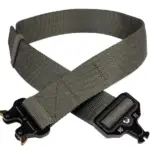
Modern and user-friendly, ratchet belts use a track-based adjustment system rather than holes or Velcro. The result is micro-adjustability — you can tighten or loosen your belt with extreme precision.
The LO-PRO 1.75″ Ratchet Belt is an excellent example, featuring a low-profile buckle that’s fast, silent, and ultra-reliable.
- Velcro / Hook-and-Loop Belts
Common in range setups, these belts are flexible, easy to adjust, and perfect for lighter loads. However, they can wear out faster if frequently exposed to dirt or friction.
- EDC Belts
Everyday Carry belts blend tactical utility with casual style. They’re great for those who want the strength of a duty belt without a bulky appearance.
Materials: The Backbone of a Tactical Belt
The material composition defines how your belt performs under stress. The most common types are:
🔹 Nylon Webbing
Lightweight yet incredibly strong, nylon is the gold standard for tactical belts. It resists abrasion, moisture, and tearing — making it perfect for duty use.
🔹 Polymer Composites
Modern belts like the LO-PRO use reinforced polymer buckles that provide strength without the weight of metal. They also prevent belt noise — a subtle but crucial detail for law enforcement or hunters.
🔹 Reinforced Stitching
Double or triple stitching ensures the belt maintains rigidity over time. Cheaper belts often fray or lose stiffness after extended wear — avoid these for professional use.
🔹 Teflon or Water-Resistant Coating
Premium belts sometimes include a protective coating to repel oil, dirt, and moisture, ensuring long-term performance.
The LO-PRO 1.75" Ratchet Belt — Designed for Duty
If you want a tactical belt that balances comfort, rigidity, and speed, the LO-PRO 1.75″ Ratchet Belt is a standout option.
Engineered for both law enforcement professionals and range enthusiasts, it’s designed to handle the rigors of daily use while maintaining a sleek, low-profile appearance.
Key Features:
- Precision ratchet system: Achieve a perfect fit with micro-adjustment accuracy — no holes, no Velcro, just clean function.
- Quick-release buckle: Instant removal or adjustment with one hand.
- Reinforced webbing: Built to carry holsters, magazine pouches, and multi-tools without sagging.
- 1.75″ width: Compatible with most tactical gear, including MOLLE attachments.
- Lightweight comfort: Built for all-day wear, even when fully loaded.
This belt is ideal for both duty environments and range operations, providing the right balance between performance and professional appearance.
How to Set Up a Tactical Belt
Proper belt setup is critical for efficiency and comfort. The wrong configuration can cause weight imbalance, fatigue, and slower response times.
Step 1: Define Your Purpose
Are you using it for duty, training, or competition?
Your loadout changes based on your mission:
- Duty Use: prioritize stability, holsters, and pouches.
- Competition Shooting: focus on balance and fast access.
- Range Practice: comfort and minimalism matter most.
Step 2: Position Your Gear
Typical configuration:
- Front: sidearm or holster mount
- Support side: mag pouches or tourniquet holder
- Rear: utility pouch or dump bag
You can mount your pouches easily using the Tek-Mount Mini system, which allows 360° rotation and instant swapping without tools.
Step 3: Adjust for Comfort
Ratchet belts like the LO-PRO make micro-adjustments easy. Tighten your belt to keep equipment secure without limiting flexibility or breathing.
Accessories That Complement Your Belt
Your belt works best when combined with other performance gear. Tactical professionals often pair their setup with:
- EXO K1 Knee Pads for enhanced protection and shooting stability.
- Range Bag to organize ammunition, eyewear, gloves, and tools.
- Competition Shooting 2.0 Gloves for superior grip and trigger feel.
Each of these products enhances your performance — whether you’re competing, training, or working in the field.
Maintenance and Longevity Tips
A good tactical belt should last years — if you care for it properly. Here’s how to extend its lifespan:
- Clean Regularly:
Use mild soap and water to remove dirt and sweat buildup. Avoid bleach or harsh detergents. - Inspect Stitching and Buckles:
Check for fraying, broken stitches, or buckle wear every few months. - Avoid Overloading:
Even durable belts have weight limits. Distribute heavy gear evenly to prevent warping. - Store Flat:
Don’t roll your belt tightly — it can create permanent bends in the webbing.
With minimal maintenance, a quality tactical belt like the LO-PRO 1.75″ can easily last three to five years or longer under active use.
Common Mistakes When Choosing a Tactical Belt
Even seasoned professionals can overlook key details when buying a new belt. Here are the most frequent errors:
- Buying too soft a belt:
A floppy belt won’t support holsters or tools effectively. Always test stiffness before buying. - Choosing the wrong width:
Most duty gear is built for 1.5″ to 1.75″ widths. Too narrow, and your attachments won’t fit properly. - Ignoring adjustability:
Ratchet or Velcro adjustment systems are critical for a precise fit — avoid fixed-size belts. - Overlooking compatibility:
Check that your holsters, pouches, and Tek-Lok mounts are compatible with your chosen belt.
The LO-PRO isn’t just another nylon strap — it’s a piece of engineering designed around professional needs. It bridges the gap between comfort, style, and tactical utility, offering a versatile solution for everyone from range shooters to active-duty officers.
Its micro-adjustable ratchet system means you can adapt instantly to sitting, standing, or kneeling — no need to undo your belt entirely. And the low-profile design makes it ideal for discreet wear, blending tactical strength with an understated aesthetic.
If you’re serious about performance, this belt is an investment in both function and comfort.
Final Thoughts
Your belt might be the smallest component of your loadout, but it has one of the biggest impacts on your overall efficiency and readiness. A poorly chosen belt can throw off balance, cause discomfort, or even result in dropped gear during critical moments.
The LO-PRO 1.75″ Ratchet Belt delivers the durability and flexibility required by professionals — making it the perfect choice for duty, range, or everyday tactical use.
Pair it with complementary gear like the Tek-Mount Mini, EXO.K1 Knee Pads, and Range Bag for a complete, high-performance setup that’s built to last.
At Tactical Threadwork, we don’t just sell tactical equipment — we build reliable systems that keep you mission-ready, every day.
FAQ
Q1: What makes a belt “tactical”?
A tactical belt is built with reinforced materials and high load-bearing capacity. It’s designed to support holsters, pouches, and tools securely without sagging — unlike regular fashion belts.
Q2: Is a tactical belt suitable for everyday carry?
Absolutely. Low-profile options like the LO-PRO Ratchet Belt combine functionality and clean aesthetics, making them ideal for both tactical use and civilian wear.
Q3: What size tactical belt should I buy?
Always check your waist size and consider extra room for gear. Most belts include adjustable systems that cover several inches of adjustment.
Q4: How should I clean my tactical belt?
Hand wash with mild soap and air dry. Avoid machine washing or high heat exposure, as these can damage the webbing or buckle.
Q5: How long should a tactical belt last?
With proper maintenance, a quality belt can last anywhere between three and five years — sometimes longer, depending on frequency of use.